In this article, we explore how to construct a well-balanced portfolio using a mix of fixed coupon, floating rate notes, and inflation-linked bonds and the benefits each type of bond offers.
After a period of moderation, inflation has re-accelerated in recent months, and central banks are again focused on keeping price pressures contained. However, war in the middle east has contributed to higher inflation and elevated volatility in equity and bond markets alike. At the same time, concerns around the high levels of government debt in major economies such as the US, Japan and France have kept upward pressure on longer-term borrowing costs. In Australia, the RBA has recently lifted the cash rate again, reinforcing that the path back to the 2–3% inflation band may be uneven and that “higher for longer” settings remain a real possibility.
From an asset allocation perspective, bonds have re-emerged as an attractive option for advisers seeking reliable income with lower exposure to the volatility typically associated with growth assets. Yields remain attractive in many parts of the market, but with inflation proving sticky and rates moving higher again, paying close attention to maturities (and overall portfolio duration) is especially important.
Many regular readers of this publication will have attended one of our Introduction to Fixed Income seminars to build a foundation in the asset class.
This piece builds on that foundation by examining the different types of bonds available and how and when they can be used effectively.
Three Types of Bonds
- Fixed Rate Bond
- Floating Rate Note
- Inflation-Linked Bond (Capital Indexed, Indexed Annuity Bond)
Ideally, a diversified bond portfolio will incorporate all three of the abovementioned bond types. However, for those wishing to enhance their exposure and take advantage of these bonds depending on the prevailing market conditions, skewing your portfolio to be weighted more heavily to one sort over the others is a strategy that many bond managers employ.
If we begin with a basic balanced portfolio weighting of 40% Fixed Rate, 40% Floating Rate, and 20% Inflation-Linked Bonds, investors can look to be over or underweight a bond type depending on their thinking.
Fixed Rate Bonds
The Fixed Rate Bond is the type that most will be familiar with. It offers a fixed return, with a finite maturity or call date and once purchased investors will know the expected return should they hold until call or maturity.
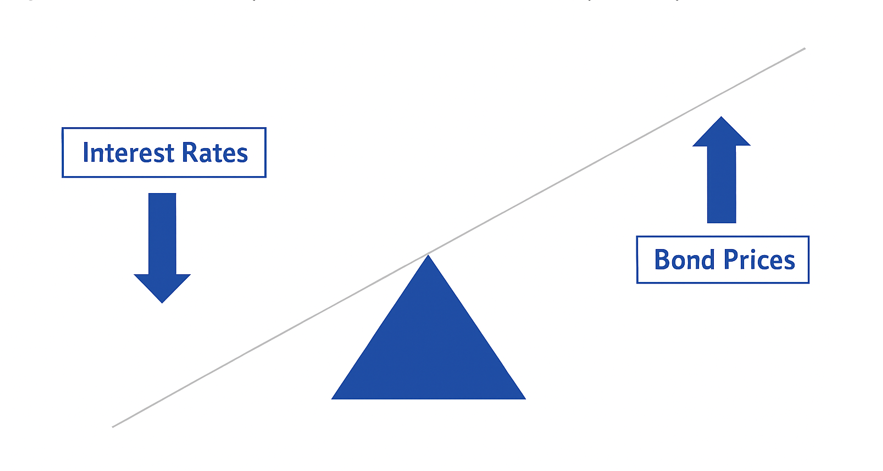
As we have mentioned in prior articles, these bonds do come with interest rate risk. Once purchased, if interest rates continue to rise above current market expectations the price of these bonds will fall (and vice versa as the chart below shows). This is particularly relevant for investors who may need to exit the bond prior to maturity (or anticipated call date).
Figure 1: Inverse relationship between interest rates and fixed coupon bond prices
Source: FIIG Securities.
However, once you have assessed this risk and have researched your own expectations of interest rate movements, skewing your portfolio to be more heavily weighted to Fixed Rate Bonds can allow the investor to lock in enhanced yields.
It also gives investors greater visibility over future cash flows and expected returns. This is what is called “adding duration”, since you are locking in fixed returns, based on current interest rates, for a longer period into the future.
However, locking in fixed returns means the investment, if held to maturity, will not benefit from rising rates, nor be adversely affected by falling rates. But if the investment is exited before maturity, you have a longer section of the investment that has been locked in at yields which are potentially different to the ones prevailing in the market when the bond is sold. In this way, the duration is also a measurement of a bond’s interest rate risk should investors seek to exit the investment before maturity.
Generally, the higher a bond's duration the more its price will fall as interest rates rise; however, the reverse is also true. Should we see interest rates fall, the longer the duration of the bond the larger the likely increase in the price of your bonds as yields fall.
This dynamic is particularly relevant today as markets reassess the outlook: inflation has shown renewed strength, and the probability of further easing in the near term has diminished. In Australia, the recent rate hike highlights that the risk of rates staying higher, or moving higher again, cannot be ignored.
One can see the obvious risks in this strategy. If central banks maintain restrictive settings or are forced to tighten further, interest rates could rise from current levels and cause falls in bond prices. Equally, if inflation moderates more quickly than expected or unemployment rises, rates may still move lower over time.
If investors are comfortable with their required return, time horizon and credit quality, selectively locking in yield can still make sense (particularly in high-quality names), but it should be balanced against the risk that inflation keeps rates elevated for longer (or prompts further tightening). A laddered approach to maturity can help manage this uncertainty.
Floating Rate Notes
As the name suggests, this type of bond pays a coupon that moves in line with changes in interest rates. Typically, the 3-month Bank Bill Swap Rate (BBSW) is used as the reference rate, with a fixed margin added on top. This margin is set at the original issuance depending upon credit quality and other comparable issuance in the market. A recent example is the Liberty Financial Pty Ltd Mar-31 bond with a coupon of 3-month BBSW+177 basis points (bps) which was issued in May 2026. The 3-month BBSW rate will move up and down over the course of this bond, whilst the 177bp margin will remain fixed during the bond's lifetime.
When looking at the 3-month BBSW rate, it’s important to understand that this is a moving market rate and will take into account the actual cash rate at any point as well as market expectations of any other movements in the cash rate in the future. The price of interest rates in the market also implies the expected trajectory of the 3-month BBSW rate into the future. These expectations are forward-looking and can prove inaccurate - at times materially so.
Figure 2: 3 month BBSW rates now, and expected into the future

Source: FIIG Securities, Bloomberg.
Market pricing and economist views can shift quickly. With inflation having lifted again and the RBA recently raising rates, expectations have moved toward a “higher for longer” profile, with expectations of more hikes in the future, and only some small cuts priced to occur well into the future. That is why the expected BBSW rate rises over time, then sits flat for a while, followed by a small descent.
Investors who expect more rate cuts than currently priced in may prefer fixed rate bonds; conversely, those who believe rates will remain higher for longer or move higher again may favour floating rate exposure.
However, those concerned that inflation remains sticky, and that policy may stay restrictive (or tighten further) may consider a higher weighting to short-dated floating rate notes, which generally carry less duration risk and can reprice their coupons as rates move. The key risk is one of opportunity cost in either direction: if the RBA delivers more rate cuts than currently expected, floating rate income will decline; however, if rates remain elevated for longer, or increase further, floating rate notes will continue to benefit from higher running yields relative to fixed rate alternatives.
Inflation-Linked Bonds
Inflation-Linked Bonds (ILBs) are, as the name suggests, designed to track inflation and allow your future coupon stream and final capital returns to increase in line with the inflation rate.
While the current environment with its risk of inflation might make Inflation-Linked Bonds seem enticing, there are some key elements that make this difficult.
Firstly, Australia has not seen any corporate Inflation-Linked Bond issuance since 2007. Nor is new issuance particularly likely, meaning there are very few remaining corporate “linkers” in the market. While the government “linker” market remains open, the yields there are lower.
Secondly, Inflation-Linked Bonds come in two types:
- Capital Indexed Bonds (CIBs): the inflation calculation is added to the initial principal. Coupons are then paid as a percentage of this index-linked principal, meaning the coupons are inflation-linked too in a practical sense. The indexed value of the bond is received at final maturity, rather than the par issue value.
- Indexed Annuity Bonds (IABs): is where the inflation return is included in the quarterly cash flow that also provides a portion of both principal and interest. These will eventually pay down to $0 meaning you receive your original principal gradually over the life of the bond and do not receive a final return of capital in a lump sum.
There is also a lag effect in the pricing of the Capital Indexed Bond where the inflation adjustment is calculated as the average of the prior two inflation prints.
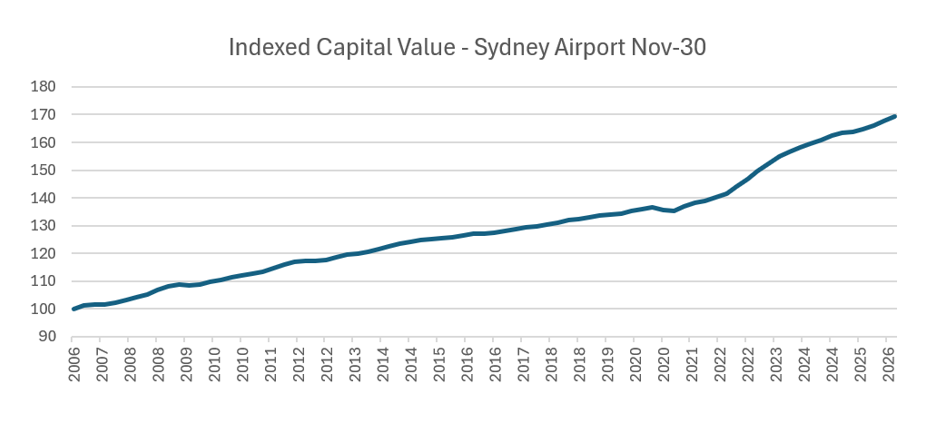
Furthermore, to take full advantage of future inflation rates, the investor would need to hold these investments until maturity, and most remaining ILBs in the market have long maturity dates to 2030 and beyond. The only corporate Capital Indexed Bond effectively remaining on the market is the Sydney Airport 3.12% 2030 line.
Trying to position the portfolio to overweight these securities can be difficult given the smaller supply and illiquidity. There is often supply of the Sydney Airport bond available, but the IABs are more patchy.
The chart below illustrates the increasing indexed value of the Sydney Airport 2030 bond, as the face value of the bond keeps pace with inflation.
Figure 3: The Capital Indexation of the Sydney Airport Nov-30
Source: FIIG Securities, Bloomberg.
Conclusion
In Summary, the current economic climate is marked by renewed inflation pressure, tighter monetary policy settings, and ongoing market volatility. Based on the investor’s outlook on the markets, one can position themselves accordingly using the 3 different types of bonds highlighted in this article. Each of these types of bonds will possess different characteristics and have a place in a diversified portfolio.